Introduction
Yoga and Pilates often get grouped together as gentle, low-impact workouts. Both improve posture. Both build core strength. Both calm a busy mind.
However, their roots and their spiritual depth are quite different. So, which one truly supports spiritual grounding, not just physical flexibility? Let’s break it down.
Where Yoga Comes From
Yoga began thousands of years ago as a spiritual discipline. It was never just a workout trend. Its foundation rests on breath control, meditation, and intentional movement.
Physical postures, known as asanas, are only one part of the practice. In fact, traditional yoga aims to unite body, mind, and spirit into one focused state. Styles like Hatha, Vinyasa, and Yin weave mindfulness and breathwork into every session.
As a result, yoga offers an easy entry point for spiritual fitness beginners. It invites stillness. It invites self-reflection. It slows down your relationship with your own body.
If you want to build this mindset into your mornings, our guide to a morning spiritual routine offers a simple place to start.
Where Pilates Comes From
Pilates, on the other hand, emerged in the early twentieth century as a rehabilitation method. Joseph Pilates designed it to strengthen the core and improve alignment. Unlike yoga, it was never built around spiritual philosophy.
That said, Pilates still demands serious mental focus. Many practitioners describe a meditative quality in its slow, controlled movements. So, it can sharpen concentration even without a spiritual framework attached.
Therefore, Pilates works best for people who want structured, measurable progress. It also suits anyone recovering from injury or seeking postural correction.
Yoga vs Pilates: The Spiritual Difference
When it comes to spiritual grounding, yoga holds a clear edge. Why? Its focus on breath and inward awareness naturally supports mindfulness. Many sessions close with meditation or quiet reflection, which deepens that spiritual connection.
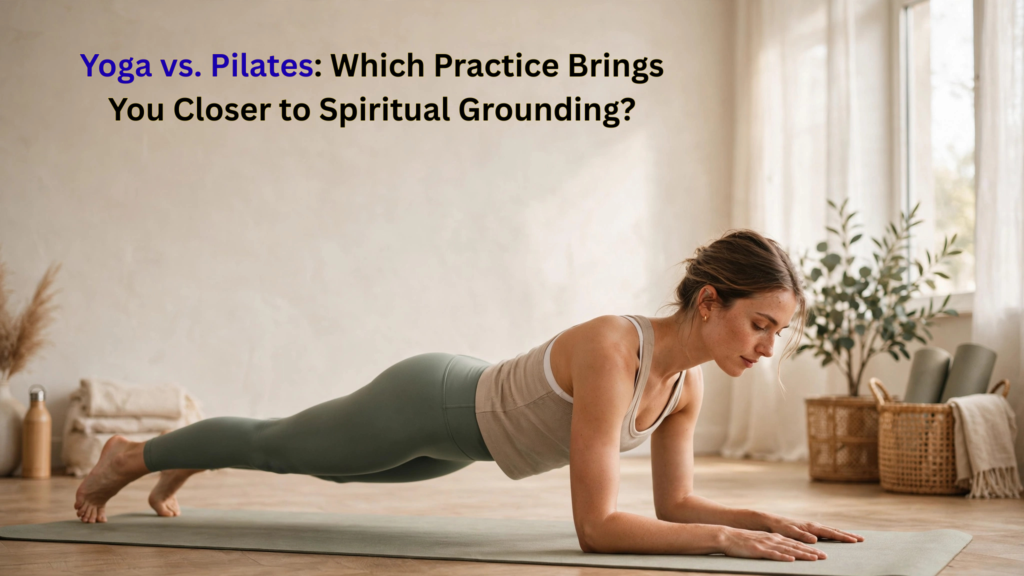
Pilates, in contrast, centers on precision and muscle control. It builds discipline and body awareness. But it rarely includes meditation or spiritual ritual.
Still, some practitioners find a contemplative rhythm in its repetitive, breath-linked movements. Neither practice requires religious belief to feel spiritually meaningful. Both can become a moving meditation, as long as you bring presence and intention to the mat.
Which One Fits Your Goals?
Consider your priorities before choosing:
- Choose yoga if you want mindfulness, breathwork, and a practice rooted in spiritual tradition.
- Choose Pilates if your main goal is core strength, posture, and structured physical results.
- Choose both if you want spiritual grounding alongside a strong physical foundation.
Many practitioners, in fact, find real value in doing both. Yoga nurtures the spirit, while Pilates builds the strength that supports a sustainable practice.
How to Combine Both Practices
You don’t have to pick only one. Instead, try pairing them across your week. For example, use yoga for mindfulness on two or three days. Then add Pilates for core conditioning on the others.
This balance reflects a bigger idea in holistic wellness: true fitness includes body, mind, and spirit working together. For more ideas on building sustainable daily habits, explore our tips on improving gut health naturally, since physical wellness and spiritual grounding often go hand in hand.
Final Thoughts
So, yoga vs Pilates: which wins? Honestly, both offer real value, but they serve different purposes. Yoga leans toward spiritual grounding and inward awareness. Pilates leans toward physical precision and discipline.
Understanding this difference helps you choose the practice that truly fits your goals. And whichever path you pick, remember: consistency and presence matter more than perfection.
Looking for more ways to build a balanced routine? Browse our Fitness and Spirituality categories for more guides like this one.